ಬೆಲಾರಸ್: 1992 ರಿಂದ ಆಲೂಗಡ್ಡೆ ಉತ್ಪಾದನೆಯು 65% ರಷ್ಟು ಕುಸಿದು 3.1 ಮಿಲಿಯನ್ ಟನ್ಗಳಿಗೆ ತಲುಪಿದೆ, ಏಕೆಂದರೆ ಮನೆಗಳು ಇನ್ನೂ 76% ರಷ್ಟು ಬೆಳೆಯುತ್ತಿವೆ.

ಕೀ ಟೇಕ್ಅವೇಗಳು
- 1992 output was 8.98 Mt at a yield of 11.5 t per hectare
- 2024 output fell to 3.11 Mt, with yield rising to 22.1 t/ha
- 76% of the 2024 crop was grown on small household plots
- 341 kg of potatoes are produced per person, Belstat says
ಇದು ಏಕೆ ಮುಖ್ಯವಾಗಿದೆ
- ರೈತರಿಗೆ
- ಸಂಗ್ರಹಣೆ ಮತ್ತು ಶ್ರೇಣೀಕರಣ ಸಾಮರ್ಥ್ಯವನ್ನು ಯೋಜಿಸಿ; ವಾಣಿಜ್ಯ ಸಾಕಣೆ ಕೇಂದ್ರಗಳು ಹೆಚ್ಚಿನ ರಫ್ತು ಮಾಡಬಹುದಾದ ಆಲೂಗಡ್ಡೆಗಳನ್ನು ಪೂರೈಸುತ್ತವೆ ಆದರೆ ಮನೆಯ ಉತ್ಪಾದನೆಯು ಕುಗ್ಗುತ್ತಲೇ ಇರುತ್ತದೆ.
- ವ್ಯಾಪಾರಿಗಳಿಗೆ
- ರಾಷ್ಟ್ರೀಯ ಮೊತ್ತವಲ್ಲ, ವಾಣಿಜ್ಯ ಸಾಕಣೆ ಕೇಂದ್ರಗಳ ಸುತ್ತಲೂ ಪೂರೈಕೆ ಪಟ್ಟಿಗಳನ್ನು ನಿರ್ಮಿಸಿ; ಮನೆಗಳು ಬೆಳೆಯ 76% ಅನ್ನು ಬೆಳೆಯುತ್ತವೆ ಆದರೆ ಕಡಿಮೆ ಮಾರಾಟ ಮಾಡುತ್ತವೆ.
- ಪೂರೈಕೆದಾರರಿಗೆ
- Target private farmers for seed, machinery and storage sales; their output rose almost fourfold since 2005
- ಹೂಡಿಕೆದಾರರಿಗೆ
- Check the commercial segment, not the headline harvest: it is small but grows fast and has much higher yields
60-ಸೆಕೆಂಡ್ ಸಾರಾಂಶ
Belarus still grows far more potatoes per person than most countries, yet its total crop is now roughly a third of the early 1990s level. FAOSTAT records 8.98 million tonnes for 1992 and 3.11 million tonnes for 2024, and by our calculation the harvested area shrank by around four fifths while yields nearly doubled. The 2025 crop, according to Belstat, came to just over 3 million tonnes at 219 centners per hectare. Most of the fall happened on household plots, whose output dropped by almost 70% after 2005. Private farmers moved the other way and now supply more than 420,000 tonnes, about four times their 2005 volume. This matters for buyers in Russia and nearby markets, because the storable, graded surplus most likely comes from the commercial segment. One caveat applies: the farm-category split comes from a media analysis of Belstat tables, not from the tables themselves.
Belarus harvested 8.98 million tonnes of potatoes in 1992, according to FAOSTAT data published by Our World in Data. The yield was 11.5 tonnes per hectare. In 2024 the same data show 3.11 million tonnes at 22.1 tonnes per hectare.
By our calculation, the harvested area fell from about 779,000 hectares to about 141,000 hectares. That is a drop of roughly 82%. Output fell by about 65%, because yields almost doubled over the period.
The 2025 harvest
The national statistics committee Belstat reported a 2025 harvest of 3,047.2 thousand tonnes in all categories of farms. The average yield was 219 centners per hectare, or 21.9 tonnes. In November 2025 the committee said the country produces 341 kilograms of potatoes per person.
ವಾರದ ದಿನಗಳು. ಒಂದೇ ಕ್ಲಿಕ್ನಲ್ಲಿ ಅನ್ಸಬ್ಸ್ಕ್ರೈಬ್ ಮಾಡಿ.
Who grows the potatoes
Household plots still dominate. In 2024 households grew 76% of all potatoes, according to Belstat data analysed by the business outlet Officelife. Private farmers grew 14% and agricultural enterprises 11%.
The decline came almost entirely from households. Their output fell from more than 7.5 million tonnes in 2005 to about 2.4 million tonnes in 2024. That is a fall of almost 70%. Over the same period private farmers raised output almost fourfold, from 80,000 to more than 420,000 tonnes.
Enterprises and households both cut their potato area by more than 70% in 20 years, the outlet reported. Yields in enterprises rose by 77%. Farmers raised yields 2.2 times.
Consumption and exports
Belarusians also eat fewer potatoes. Consumption fell from about 183 kilograms per person a year in 2005 to about 162 kilograms in 2023, according to the same analysis. That is a drop of 11%.
At the same time Belarus became the largest supplier of potatoes to the Russian market in 2024. Wholesale prices in Russia doubled that year, which made exports attractive.
ಇದು ಏಕೆ ಮುಖ್ಯವಾಗಿದೆ
The Belarusian potato sector is moving from millions of garden plots to fewer commercial farms. The commercial part is still small, but it grows fast and has much higher yields. This part is the most likely source of potatoes that are stored, graded and exported.
For buyers in Russia and other neighbouring markets, Belarus is a key source. Its exportable surplus probably depends more on commercial farms than on the headline national harvest.
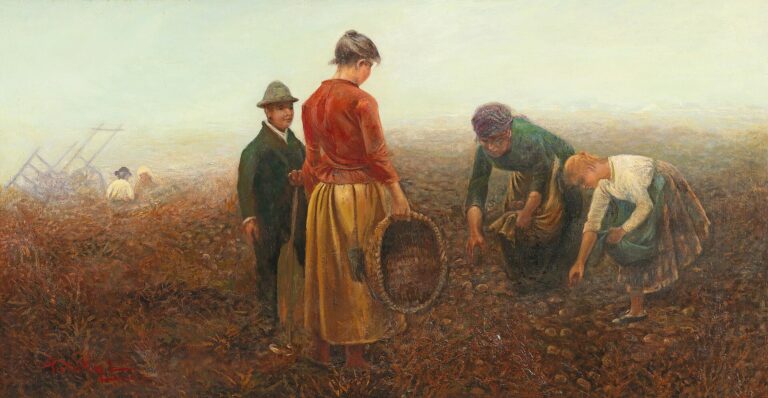
Photo: Potato harvest, a 1911 painting by Viktor Zarubin (illustrative). Viktor Zarubin / ವಿಕಿಮೀಡಿಯ ಕಣಜದಲ್ಲಿ, ಸಾರ್ವಜನಿಕ ಡೊಮೇನ್
ಜಾಗತಿಕ ಆಲೂಗಡ್ಡೆ ಸಂಕ್ಷಿಪ್ತ ಮಾಹಿತಿ
ಪ್ರಮುಖ ಐದು ಸುದ್ದಿಗಳು, ಬೆಲೆಗಳು, ರೋಗ ಎಚ್ಚರಿಕೆಗಳು ಮತ್ತು ಘಟನೆಗಳು. ವಾರದ ದಿನಗಳ ಬೆಳಿಗ್ಗೆ, ಜಾಹೀರಾತು ಇಲ್ಲ.
ಮೂಲಗಳು
- ನಮ್ಮ ವಿಶ್ವ ದತ್ತಾಂಶ, ಆಲೂಗಡ್ಡೆ ಉತ್ಪಾದನೆ / ಆಲೂಗಡ್ಡೆ ಇಳುವರಿ (FAOSTAT ದತ್ತಾಂಶ, ನವೀಕರಿಸಲಾಗಿದೆ 25.02.2026) — https://ourworldindata.org/grapher/potato-production ; https://ourworldindata.org/grapher/potato-yields
- Белстат, инфографика «Растениеводство 2025» — https://www.belstat.gov.by/upload-belstat/upload-belstat-pdf/oficial_statistika/2025/infografik-rastenievodstvo-2025.pdf
- Белстат, пресс-релиз «О производстве продукции растениеводства в хозяйствах всех категорий за 2025 год» — https://www.belstat.gov.by/ofitsialnaya-statistika/realny-sector-ekonomiki/selskoe-hozyaistvo/selskoe-khozyaystvo/godovye-dannye/press-reliz-o-proizvodstve-produktsii-rastenievodstva-v-khozyaystvakh-vsekh-kategoriy-v-rb/
- Белновости (Сколько зерна, молока, картофеля и овощей производится на душу населения в Беларуси), 14.11.2025 — https://www.belnovosti.by/ekonomika/skolko-zerna-moloka-kartofelya-i-ovoshchey-proizvoditsya-na-dushu-naseleniya-v-belarusi
- Officelife (Картофельный вопрос. Что случилось со «вторым хлебом» белорусов) — https://officelife.by/article/62417-kartofelnyy-vopros-chto-sluchilos-pokazyvaem-na-grafikakh/
ಈ ವಿಷಯದಲ್ಲಿ ಲಿಂಕ್ ಮಾಡಲಾಗಿದೆ
- ದೇಶದ
- ಬೆಲಾರಸ್
ಸಂಬಂಧಿತ ಕಥೆಗಳು
ನೆದರ್ಲ್ಯಾಂಡ್ಸ್: ಫ್ರೈಸ್ಲ್ಯಾಂಡ್ ಬೀಜ ಬೆಳೆಗಾರ ಅನ್ನಾಬೆಲ್ಲೆಯನ್ನು ಐದು ತಲೆಮಾರುಗಳವರೆಗೆ ಮಿನಿಟ್ಯೂಬರ್ಗಳಿಲ್ಲದೆ ಸ್ವಚ್ಛವಾಗಿಟ್ಟಿದ್ದಾರೆ
ಯುರೋಪ್: EU_36 ಲೇಟ್ ಬ್ಲೈಟ್ ಕ್ಲೋನ್ ಮಾದರಿಗಳ 34% ಕ್ಕೆ ಇಳಿದಿದೆ, ನಿರೋಧಕ EU_43 12% ಕ್ಕೆ ಏರಿದೆ.